Mostrando postagens com marcador english. Mostrar todas as postagens

9 de mai. de 2020

Verena

In the first verses of the Dhammapada, the Buddha's disciples state what are maybe his most famous verses: "Hatred does not cease by hatred at any time; but only by non-hatred: this is the eternal rule".

We are now living through possibly the hardest period mankind as a whole has experienced since the World War II. A period that might define the years 2020 for centuries to come – unless something even harsher comes at its wake. The Coronavirus pandemic unravelled, like the Pandora Box myth, many shades of emotions that were dormant for years: from compassionate actions by financial hawks to unbelievable displays of contempt for fellow grieving citizens by popular figures. 

Now, this should be a time of union, and in many senses it is: never have so many people stayed locked in their homes at the same time; and never has the global economy been halted for so long. Such is the power of compassion, empathy, and sense of survival. Staying home – experts tell us and experience shows – is the only means we have at this moment to save lives.

Nevertheless, while most of the world is collectively mourning the victims of this plague under a (very important at such times) leadership usually empathetic to the situation of their people, Brazilians are being showered with a constellation of the most insane lunacies from the man whose job was to lead us through this as smoothly as possible. I do not know what agenda lies under this erratic behaviour – though, given the frequency of my posts, I might have an answer in the next entry –, but it is certainly shattering the solidarity that binds our people together. A country widely known for its joyful spirit – a sunshine that many times helped warming up the gloomy seriousness of the Old World – is being showcased internationally as the epicenter of paranoia, negacionism and nationalism. Internally, we, the messengers of samba and happiness, are transforming into the pall-bearers of hate. People who were always kind and generous are now offending others without hesitation: even my grandmother recently wished in a Facebook post that our President would soon go down and meet the Devil in person. I (very) often catch myself counting my breath after reading the news these days, and cannot resist lowering my vocabulary when commenting on them. 

I do not know exactly when all this started, but the recent upheaval in our politics (which culminated in an impeached president) and the ocean of corruption unveiled by then played a central role in that. It is impressive to witness the emotional power of corruption; how it is able to evoke strong responses and stir people up. Narratives also played a major role there, of course: in the blink of an eye, the whole political left became the culprits of the money-laundering scandals and the targets of a tsunami of hate — even though most beneficiaries of the unfolded schemes were old politicians from centre-right parties and big sharks of the construction industry. Eventually, this hatred gained momentum and led to the election of our current president.

Anyway, the rift has been deepening ever since he came to power (January 2019), but it feels like this separation is becoming an insurmountable abyss at an exponential rate recently. Maybe the social isolation is playing a role here: staying at home is psychologically challenging, and it contributes to pushing us deeper and deeper into our own bubbles. As a consequence, bubbles grow larger and move further from each other, and conflicts are strengthened. However, none of this needed to happen now: this should be a time of union! Most leaders have seized this moment to unite their countries and heal old wounds. Our President, instead, keeps sending controversial and hateful messages every single week since the start of the outbreak around here. And, with every single message, a wave of supporters descend to carry around his poison all over the internet. People horrified at his out-worldily remarks become understandably angry, and eventually lash out at his supporters; who then move ahead to defend him furiously. There seems to be no common values shared among them anymore. This, like a huge bowl of fresh dough waiting to be baked, hatred keeps on inflating.

Society is bound together by solidarity: in its absence, we move towards an unruly world – a state of anomie. Hatred, often fomented by misinformation and distrust, is a key ingredient to fuel an anomic state, where society cannot find common values and live in harmony. It seems crystal clear that we are moving in that direction, but where is the limit? Where is (or was?) the point of no return?

"Hatred does not cease by hatred at any time; but only by non-hatred: this is the eternal rule."
This has never been so relevant; and yet, so hard to practise. We could all benefit from some effort here.

#StayHomeStaySafe
🙏

1 de abr. de 2014

3 de nov. de 2013

White Tyger

O mighty Tyger,
Guardian of the West Sky,
Let me be thy humble rider
For a brief score of time;
Grant me that I may follow Thee
Throughout thy scouting rounds,
Over countless galaxies,
Where Life and Love abound.

O, great Tyger:
Quickly! Seize me into thy Whiteness:
Though I be but a poet minor,
I vow to clash for thy Quest.
And, together, we shall fix this mess:
Subjugate demons and vipers;
Angels and Gods (the great dividers).

Thus could we set the world free,
Where Men would be their own;

Where Love, like a vast sea,
Would flood every single home,
With no border of faith or creed:
A World where only Peace is enthroned.

O, mighty Guardian!
Let me dream, let me dream!
Let me hunt, like thy kin Orion,
All my utopias and schemes;

Help me, Tyger: carry me on!
I need your brave scream, your mighty roar,
To frighten and empower my trembling soul.

O Tyger, mighty Tyger.
How many ages have Thee witnessed so far?
How many pitiful poets and wandering fighters;
Beggars and kings; sinners and saints, virtuous and liars:
All but insignificant little nothings, wailing at thee in awe.


Thy Stars are gazed upon since time afar,
And yet, Thou too art nowhere to be found.


--

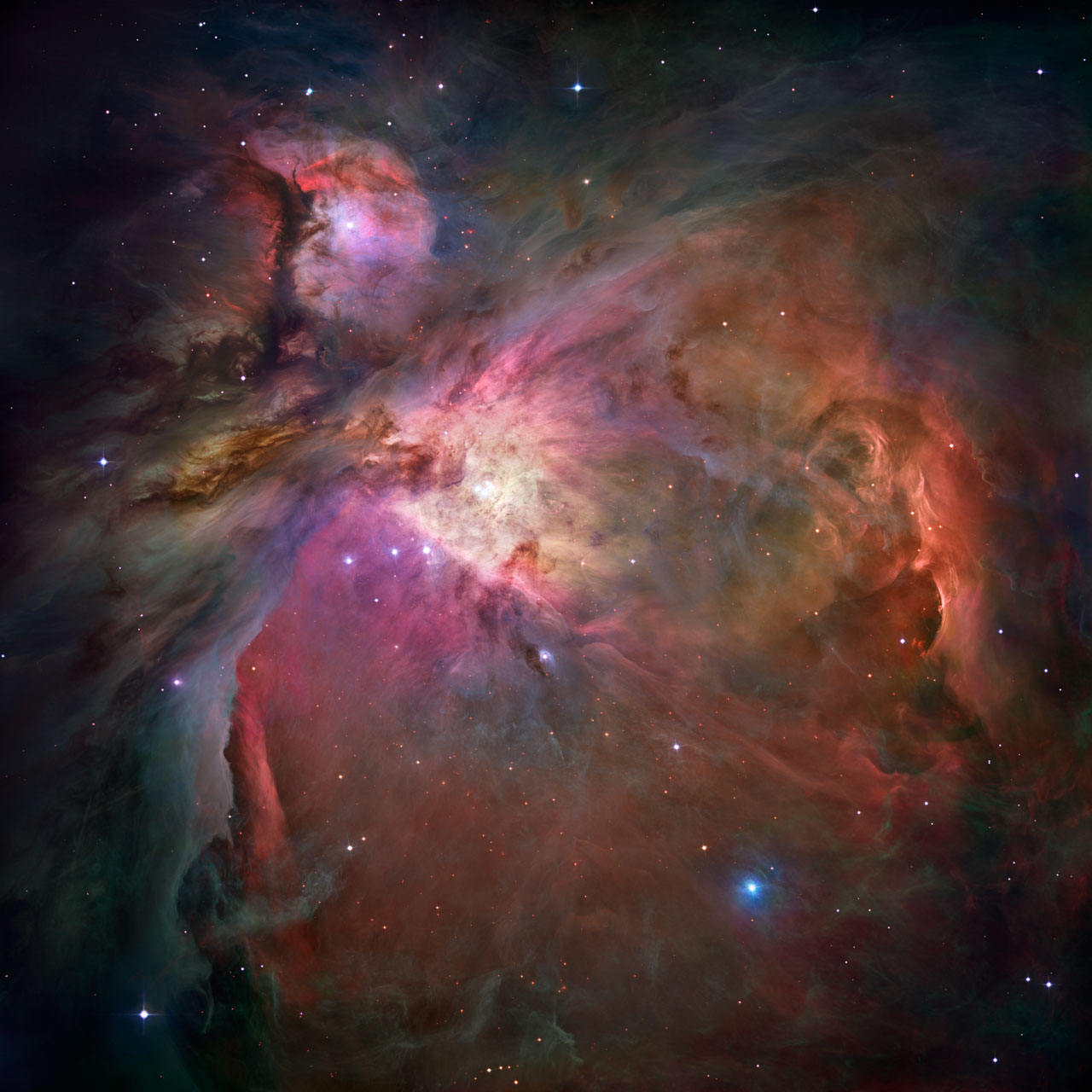
(Orion Nebula. Photo by Hubble telescope. All credits belong to NASA and ESA. The Orion belt (middle left) together with Betelgeuse, Bellatrix, Saiph and Rigel stars, make up the so called "3rd Palace" of Chinese astronomy, within the huge White Tiger group of constellations. For more information on the photo: http://www.astronet.ru/db/xware/msg/apod/2006-01-20)


25 de out. de 2013

Dusk

Sheep cloudlets,
Floating fierily through the empty sky:
May they carry on my love,
And reach you 
By sunrise


25 de ago. de 2013

Restlessly

Restlessly
Looking for you
In the silence of a starless night
To the bitter cry of the cicadas
And the shine of the moonlight
I look for you
Where no one else does
And where everyone finds
Restlessly
Anxiously
Silently


18 de abr. de 2013

Crescente

Tonight the Moon reaches the first quarter.
How many times has this happened before?
I wonder what things shall pass
Until this endless cycle come to an end.
I guess that's what life's about after all:
Aren't we all waxing and waning all the time?
And the Full Moon is just part of the journey (not its end),
As beautiful, unique, happy and sad
As any crescent or gibbous stages;
Or even the dark New Moon nights.
Every step and every phase are just
Beginnings and ends by themselves:
That's the endless journey of Life.
(And it's Wonderful.)

8 de abr. de 2013

Flowers

Washing you - washing me;
Letting everything be washed away to the very last drop,
So that all that remains
Is the pure, complete, atomic reality:
The only true Buddha.


4 de abr. de 2013

Tudo à sua espera

Poema do poeta inglês David Whyte, intitulado "Tudo à sua espera". Parte do livro de mesmo nome.
(Tradução livre)

Seu maior erro é atuar nessa peça
como se estivesse sozinho. Como se a vida
fosse um crime perfeito em progresso,
sem testemunhas de cada pequeno detalhe.
Sentir-se abandonado é negar a intimidade
com nossas vizinhanças. Por certo mesmo você,
às vezes, já sentiu a grande platéia;
sua presença inflada e suas vozes em coro,
sufocando sua voz solitária.
Você deve perceber o modo como o detergente
te dá poderes especiais, ou como
o trinco na janela te oferece liberdade.
Atenção é a disciplina oculta da familiaridade.
As escadas são suas conselheiras quanto às coisas que virão,
e as portas sempre estiveram ali para te assustar,
e para te convidar. O pequeno speaker do telefone
é a porta dos seus sonhos para a divindade.
Coloque de lado o peso de sua solidão
e relaxe na conversa. A chaleira está cantando,
mesmo enquanto te serve um chá; e as panelas
já deixaram de lado sua indiferença arrogante e
finalmente viram o bom em você. Todos os pássaros
e criaturas do mundo são indizivelmente
elas mesmas. Tudo está à sua espera.

--

Original (available here):

Your great mistake is to act the drama
as if you were alone. As if life
were a progressive and cunning crime
with no witness to the tiny hidden
transgressions. To feel abandoned is to deny
the intimacy of your surroundings. Surely,
even you, at times, have felt the grand array;
the swelling presence, and the chorus, crowding
out your solo voice You must note
the way the soap dish enables you,
or the window latch grants you freedom.
Alertness is the hidden discipline of familiarity.
The stairs are your mentor of things
to come, the doors have always been there
to frighten you and invite you,
and the tiny speaker in the phone
is your dream-ladder to divinity.
Put down the weight of your aloneness and ease into
the conversation. The kettle is singing
even as it pours you a drink, the cooking pots
have left their arrogant aloofness and
seen the good in you at last. All the birds
and creatures of the world are unutterably
themselves. Everything is waiting for you.

This poem showed up in this Easter's dharma talk themed "What gets us in conflict," by the meditation teacher Daniel Bowling at the Insight Meditation Center. Available in this link.

31 de mar. de 2013

Le Soleil

Isn't it magical?
N'importe pas combien de langues nous parlons,
No matter how many technologies we have:
Somehow nothing brings you closer to me than the Sun.
Isn't it incredible that,
No matter how far we are,
There are these precise little moments
Where we can both share the same view?
Where we can both look at each other,
Through this great huge fireball?
Ah, Nature!

24 de mar. de 2013

Sappho


Terminei esses dias de ler uma coletânea de fragmentos de poemas de Sappho, poetisa grega do século VI a.C. Gostei tanto que resolvi registrar alguns trechos aqui (obrigado ao Project Gutenberg por disponibilizar o livro de graça, e pela excelente tradução do poeta Bliss Carman!). Enjoy!


Que hajam guirlandas, Dica,
Em teus adorados cabelos;
E delicados raminhos em flor,
Tecidos por tuas mãos macias.

Pois aquele que é coroado por flores
Goza do favor dos deuses,
Que não têm bons olhos
Para os não-adornados.


--

Cresce uma nespereira
Na frente da casa do meu amor.
Lá, ao longo do dia,
O vento faz um som agradável.

E quando chega o entardecer,
Sentamo-nos juntos ao crepúsculo,
E observamos as estrelas
Aparecendo no azul silencioso.


--

Houve um tempo em que repousavas em meu colo,
Enquanto o longínguo luar prateado
Percorria pelas planícies, com aquela paixão pura
Toda tua.

Agora, a Lua se foi. As Plêiades
Já passaram, e a escuridão da noite se vai;
Escorrem as horas, e em meu leito
Encontro-me só. 


--

Ah, o que sou eu senão uma tormenta:
Obstinada, impetuosa, quebrada,
Como o clamor das águas esbravejado
No desfiladeiro azul?

Ah, e o que és tu senão uma fronde de samambaia,
Molhada pelo respingar do rio:
Timida, adorável, frágil,
Escondida na reentrância do rochedo?

Contudo, não somos por um breve dia,
Enquanto o Sol dorme na montanha,
Selvagens, amante e amado,
Seguros nos braços de Pan?


--

Amor, deixa o vento gritar
Na montanha negra,
Dobrando os freixos
E as cicutas altas;
Com a voz estrondante
De legiões trovejantes,
O quanto te adoro.

Deixa que a rouca torrente
Do desfiladeiro azul,
Murmurando ferozmente
Da cinza névoa
Do caos primordial,
Jamais cesse de proclamar
O quanto te adoro.

Deixa que o longo ritmo
Das vagas espumantes,
Quebrando e rugindo
No branco litoral,
Titânicas e incansáveis,
Conte, enquanto o mundo sobreviver,
O quanto te adoro.

Amor, deixa que o chamado claro
Do grilo silvestre,
A mais frágil das criaturas,
Verde como a grama jovem,
Marque com seu trilo
Ressonante tom agudo,
O quanto te adoro

Deixa que o alegre canto da cotovia
Pela campina,
Aquela doce lírica
De prata derretida,
Seja como um sinal
Para os mortais que a ouvirem
Do quanto te adoro.

Mas, mais do que todos os sons;
Mais certo, mais sereno,
Mais cheio de paixão
E exultação;
Deixa que o sussurro apressado
Em teu próprio coração confesse
O quando eu te adoro.


--

"Quem foi Atthis?" - homens perguntarão,
Quando o mundo for velho, e o tempo
Tiver cumprido sem pressa
O estranho destino dos Homens.

Porventura, naquela era longinqua,
Alguém há de encontrar essas canções prateadas
Com sua carga humana, e descobrir
Que bela amante Sappho foi!


--

Será que os homens se lembrarão de nós
Nos dias que estão por vir;
De tua adorável beleza
E do meu amor por ti?

Tu, o jacinto que cresce
Por um rio de águas calmas;
Eu, o reflexo aqueluzente
E o clarão disforme.


--

Ninguém falará de Sappho;
De seus amores,
E do amor que ela lhes deu:
Alegrias, dias e beleza;
Sonatas de flauta e rosas,
Canções e vinho e gargalhadas.

Será que ninguém, ao contemplar, dirá:

"E contudo, mesmo com todas as rosas,
E todas as flautas e amores;
Não tenha dúvidas que ela sentia-se só.
Só como o mar, cuja cadência
Assombra o mundo desde sempre."

--

Como um lírio vermelho nos gramados da campina,
Embalado pelo vento e queimando à luz do Sol,
Eu vi a ti, onde a cidade se engasga com o tráfego,
Sustentando entre os transeúntes tua beleza,
Imaculada, selvagem e delicada como uma flor.


--

Veja, onde os brancos
Garanhões de Poseidon
Calcam com truculência
A costa flutuante!

Mais velha que Saturno,
Mais velha que Réia;
Aquela canção lúgubre
De cheias e vazantes,
Num amplo ritmo
Incessante, eterno
Continua marcando o tempo
De tudo que é mortal.

Quantos amantes
Não foram por ela ninados,
Embalados ao descanso
Com as flores maduras.
Antes por nosso prazer,
Esse dourado Verão
Caminhava pelos milharais
Em gracioso esplendor!

Quantos amantes
Não serão chamados por ela,
Nos longos dias de Primavera
Com o passar das eras,
Quando todos os nossos devaneios
Forem esquecidos,
E não houver mais lembranças
Sequer da tua beleza!

Eles também adormecerão
Em lugares quietos,
E hão de ser surpreendidos
Pelos poderosos sons do mar.

 ----
English source:


X
Let there be garlands, Dica,
Around thy lovely hair.

And supple sprays of blossom
Twined by thy soft hands.

Whoso is crowned with flowers
Has favour with the gods,
Who have no kindly eyes
For the ungarlanded.


XIX
There is a medlar-tree
Growing in front of my lover's house,
And there all day
The wind makes a pleasant sound.

And when the evening comes,
We sit there together in the dusk,
And watch the stars
Appear in the quiet blue.


XXII
Once you lay upon my bosom,
While the long blue-silver moonlight
Walked the plain, with that pure passion
All your own.

Now the moon is gone, the Pleiads
Gone, the dead of the night is going;
Slips the hour, and on my bed
I lie alone.


XXIX
Ah, what am I but a torrent,
Headstrong, impetuous, broken,
Like the spent clamour of waters
In the blue canyon?

Ah, what art thou but a fern-frond,
Wet with blown spray from the river,
Diffident, lovely, sequestered,
Frail on the rock-ledge?

Yet, are we not for one brief day,
While the sun sleeps on the mountain,
Wild-hearted lover and loved one,
Safe in Pan's keeping?


XXXI
Love, let the wind cry
On the dark mountain,
Bending the ash-trees
And the tall hemlocks,
With the great voice of
Thunderous legions,
How I adore thee.

Let the hoarse torrent

In the blue canyon,
Murmuring mightily
Out of the grey mist
Of primal chaos,
Cease not proclaiming
How I adore thee.

Let the long rhythm

Of crunching rollers,
Breaking and bellowing
On the white seaboard,

Titan and tireless,
Tell, while the world stands,
How I adore thee.

Love, let the clear call

Of the tree-cricket,
Frailest of creatures,
Green as the young grass,
Mark with his trilling

Resonant bell-note,
How I adore thee.

Let the glad lark-song
Over the meadow,
That melting lyric

Of a molten silver,
Be for a signal

To listening mortals,
How I adore thee.

But more than all sounds,
Surer, serener,
Fuller with passion

And exultation,
Let the hushed whisper

In thine own heart say,
How I adore thee.


XXXII
Heart of mine, if all the altars
Of the ages stood before me,
Not one pure enough nor sacred
Could I find to lay this white, white
Rose of love upon.

I who am not great enough to
Love thee with this mortal body
So impassionate with ardour,
But oh, not too small to worship
While the sun shall shine,

I would build a fragrant temple

To thee, in the dark green forest,
Of red cedar and fine sandal,
And there love thee with sweet service
All my whole life long.

I would freshen it with flowers,
And the piney hill-wind through it

Should be sweetened with soft fervours
Of small prayers in gentle language
Thou wouldst smile to hear.

And a tinkling Eastern wind-bell,
With its fluttering inscription,
From the rafters with bronze music
Should retard the quiet fleeting
Of uncounted hours.

And my hero, while so human,
Should be even as the gods are,

In that shrine of utter gladness,
With the tranquil stars above it
And the sea below.


XXXIV
"Who was Atthis?" men shall ask,
When the world is old, and time
Has accomplished without haste
The strange destiny of men.

Haply in that far-off age
One shall find these silver songs,
With their human freight, and guess
What a lover Sappho was.


XXXVIII
Will not men remember us
In the days to come hereafter,-
Thy warm-coloured loving beauty
And my love for thee?

Thou, the hyacinth that grows
By a quiet-running river;
I, the watery reflection
And the broken gleam.


LIX
Will none say of Sappho,
Speaking of her lovers,
And the love they gave her,-
Joy and days and beauty,
Flute-playing and roses,
Song and wine and laughter,-

Will none, musing, murmur
,
"Yet, for all the roses,
All the flutes and lovers,
Doubt not she was lonely
As the sea, whose cadence
Haunts the world for ever."

LXX
My lover smiled, "O friend, ask not
The journey's end, nor whence we are.
That whistling boy who minds his goats
So idly in the grey ravine,

"The brown-backed rower drenched with spray,
The lemon-seller in the street,
And the young girl who keeps her first
Wild love-tryst at the rising moon,-

"Lo, these are wiser than the wise.
And not for all our questioning
Shall we discover more than joy,
Nor find a better thing than love!

Let pass the banners and the spears,
The hate, the battle, and the greed;
For greater than all gifts is peace,
And strength is in the tranquil mind."

XCII (fragment)
Like a red lily in the meadow grasses,
Swayed by the wind and burning in the sunlight,
I saw you, where the city chokes with traffic,
Bearing among the passers-by your beauty,
Unsullied, wild, and delicate as a flower.


XCV
Hark, where Poseidon's
White racing horses
Trample with tumult
The shelving seaboard!

Older than Saturn,
Older than Rhea,
That mournful music,
Falling and surging

With the vast rhythm
Ceaseless, eternal,
Keeps the long tally
Of all things mortal.

How many lovers
Hath not its lulling
Cradled to slumber
With the ripe flowers,

Ere for our pleasure
This golden summer
Walked through the corn-lands
In gracious splendour!

How many loved ones
Will it not croon to,
In the long spring-days
Through coming ages,

When all our day-dreams
Have been forgotten,
And none remembers
Even thy beauty!

They too shall slumber
In quiet places,
And mighty sea-sounds
Call them unheeded.


22 de mar. de 2013

Lenting

Clean mind, pure heart:
Touching skin, bones and marrow.
Watch the cross disappear,
As sakura trees bloom.


9 de mar. de 2013

Marching

All the gods wake from their white sleep
And bloom in full pink:
I can't help bowing in awe
And offering a prayer.
--

(Plum tree at Ueno park)

Quack quack!

The sound of ten thousand dharmas
All echoing in small ripples
On the big, boundless, crystal lake

3 de mar. de 2013

Call me by my true names


Hoje, enquanto fazia uma das atividades mais contemplativas do mundo (lavar louça), ouvi um poema do mestre vietnamita Thich Nhat Hanh no podcast do Insight Meditation Center que me chamou bastante a atenção. É um poema escrito nos anos 80, época em que os problemas da fome e das guerrilhas na África conquistavam a mídia. Nas palavras do autor, "esse é um poema sobre três de nós. A primeira pessoa é uma garota de doze anos: um dos refugiados cruzando o Golfo de Sião em um pequeno barco que, após ser estuprada por um pirata, atirou-se ao mar. A segunda é o pirata, nascido em uma vila remota na Tailândia. E a terceira pessoa sou eu. Eu estava muito irritado, claro, mas não podia simplesmente tomar partido contra o pirata: se eu pudesse, teria sido mais fácil, mas não pude. Eu percebi que, se eu tivesse nascido em seu vilarejo e experimentado uma vida similar à dele - em termos econômicos, educacionais, etc. - seria bastante provável que eu também tivesse me tornado um pirata. Portanto, não é fácil escolher um lado. Do sofrimento, escrevi esse poema. Se chama 'me chame pelos meus nomes verdadeiros,' porque eu tenho muitos nomes e, quando me chamam por um deles, devo simplesmente dizer 'sim.'" 


Não digas que partirei amanhã:
mesmo hoje ainda estou chegando.
Olhe bem: a cada segundo estou chegando
para ser um botão num galho de primavera;
para ser um pequeno pássaro, com suas asas ainda frágeis,
aprendendo a cantar em meu novo ninho;
uma lagarta no coração de uma flor;
e uma jóia oculta numa rocha.
Eu ainda chego, para rir e para chorar;
para ter medo, e para ter esperança.
O ritmo do meu coração é o nascimento e a morte
de tudo o que vive.
Sou a libélula, metamorfoseando
sobre espelho d'água do rio.
Sou o pássaro,
que mergulha para engolí-la.
Sou o sapo nadando alegremente
nas águas límpidas de uma lagoa.
Sou a cobra-d'água,
que silenciosamente se alimenta dele.
Sou a criança da Uganda - pele e ossos;
minhas pernas, finas como varas de bambu.
Sou o mercador de armas,
vendendo a morte para a Uganda.
Sou a menina de doze anos,
refugiada em um pequeno barco,
que se joga no oceano
após ser estuprada por um pirata.
E sou o pirata:
meu coração ainda incapaz
de enxergar e amar.
Sou um membro do politburo,
com as mãos cheias de poder.
E sou o homem simples que deve pagar
seu "débito de sangue" ao seu povo,
morrendo lentamente em um campo de trabalho forçado.
Minha alegria é como a primavera: tão quente
que faz flores brotarem por toda a Terra.
Minha dor, como um rio de lágrimas
tão vasto que preenche todos os quatro oceanos.
Por favor, me chame pelos meus nomes verdadeiros,
para que eu possa ouvir todos meus gritos e gargalhadas de uma só vez;
para que eu possa perceber que minha alegria e minha dor são uma coisa só.
Por favor, me chame pelos meus nomes verdadeiros,
para que eu possa acordar,
e que a porta do meu coração
possa permanecer aberta;
a porta da compaixão.

(Thich Nhat Hanh)
--


Don't say that I will depart tomorrow --
even today I am still arriving.

Look deeply: every second I am arriving
to be a bud on a Spring branch,
to be a tiny bird, with still-fragile wings,
learning to sing in my new nest,
to be a caterpillar in the heart of a flower,
to be a jewel hiding itself in a stone.

I still arrive, in order to laugh and to cry,
to fear and to hope.

The rhythm of my heart is the birth and death
of all that is alive.

I am the mayfly metamorphosing
on the surface of the river.
And I am the bird
that swoops down to swallow the mayfly.

I am the frog swimming happily
in the clear water of a pond.
And I am the grass-snake
that silently feeds itself on the frog.

I am the child in Uganda, all skin and bones,
my legs as thin as bamboo sticks.
And I am the arms merchant,
selling deadly weapons to Uganda.

I am the twelve-year-old girl,
refugee on a small boat,
who throws herself into the ocean
after being raped by a sea pirate.
And I am the pirate,
my heart not yet capable
of seeing and loving.

I am a member of the politburo,
with plenty of power in my hands.
And I am the man who has to pay
his "debt of blood" to my people
dying slowly in a forced-labor camp.

My joy is like Spring, so warm
it makes flowers bloom all over the Earth.
My pain is like a river of tears,
so vast it fills the four oceans.

Please call me by my true names,
so I can hear all my cries and my laughter at once,
so I can see that my joy and pain are one.

Please call me by my true names,
so I can wake up,
and so the door of my heart
can be left open,
the door of compassion.


--
(Fonte: http://www.allspirit.com/names.html)

28 de fev. de 2013

Arrivederci

Under the white cassock
A fragile old body
And a burning heart
Exploding love.
A living Christ:
A living Buddha.


26 de fev. de 2013

A kind kind of kindness


Passei alguns minutos lendo o dicionário hoje. Não, claro que não o abri deliberadamente e comecei a lê-lo - creio que ninguém mais faça isso hoje em dia -: fui à caça da etimologia da palavra inglesa 'kindly.' Naquele momento, estava discutindo com um amigo sobre a possibilidade de kind (adj. bom, bondoso, sincero) ter a mesma raiz de kindle (v. embrasar, arder): para mim faria algum sentido que kind e kindle compartilhassem de uma mesma raiz, se enxergarmos bondade como um sentimento de um coração 'quente' (ok, pode parecer meio forçado mas, ainda assim, faria pelo menos um pouco de sentido).

Então, lá fui eu checar a etimologia de kind. Quem conhece um pouco de inglês sabe que kind apresenta dois significados: como substantivo, significa tipo, espécie (e.g. Sci-fi is one of my favourite kind of movies.); como adjetivo, tem os sentidos de (i) generoso, dedicado, que pensa nos sentimentos dos outros (e.g. She's a very kind person.); e (ii) que não causa dano ou perigo, benigno (e.g. Our product is kind to the environment.). Como pode a mesma palavra ter dois sentidos totalmente distintos como substantivo e adjetivo? Será que têm raízes diferentes? 

Ocorre que ambos sentidos originaram-se do mesmo vocábulo do Inglês arcaico, gecynd (significando tipo, natureza, raça como substantivo; e natural, inato, nativo como adjetivo): o prefixo ge- caiu por entre 1150 e 1250, e a grafia mudou de cynd para kind. Eventualmente, por volta do século XIV, o sentido do adjetivo evoluiu de inato para compassivo, benigno. [1]

O que me interessou foi notar uma sutil implicação filosófica disso: talvez compaixão e bondade fossem, então, consideradas qualidades inatas do ser humano. Aparentemente, apesar de a Inglaterra já ser cristianizada àquela época, os povos de lá ainda não haviam incorporado o conceito de natureza pecaminosa do ser humano propagado pela Igreja: St. Agostinho, por exemplo, definia já no século IV que - por causa do pecado original de Adão - toda a Humanidade apresenta-se num estado de depravação por natureza, sendo cada um incapaz de fazer o bem senão pela graça de Deus [2]. A visão de Agostinho, apesar de consolidada ao longo dos séculos pelos concílios da Igreja, não seguiu sem oposição; a mais notável de Tomás de Aquino, no século XIII. (Lutero e Calvino, principais nomes da Reforma, eram adeptos da visão de Agostinho - como, aliás, as igrejas evangélicas modernas fazem questão de deixar bem claro.)

Enfim, sempre simpatizei com os Bretões e seu bom senso; agora mais ainda. :) 

P.S.: No fim das contas, kind e kindle têm raízes diferentes: kindle vem do inglês arcaico cundel (colocar fogo, inflamar) de onde, aliás, também vem a palavra para vela, candle.


--
[1] Vide http://www.etymonline.com/index.php?allowed_in_frame=0&search=kind
[2] Vide http://en.wikipedia.org/wiki/Original_sin#Augustine

White solitude

Over the vast whiteness
Only silence,
The shivering of trees,
And my anxiously beating heart.


11 de fev. de 2013

7 de fev. de 2013

King's Cross

That hug
And the world stops with the train.
"Goodbye! And take care," she said.
"I love you so much!" the whole world heard.

(Dec 14th, 2012)


York Minster

The Winter Evensong:
The air freezes outside. Inside,
My soul is ablaze.


(Dec 13th, 2012)
~